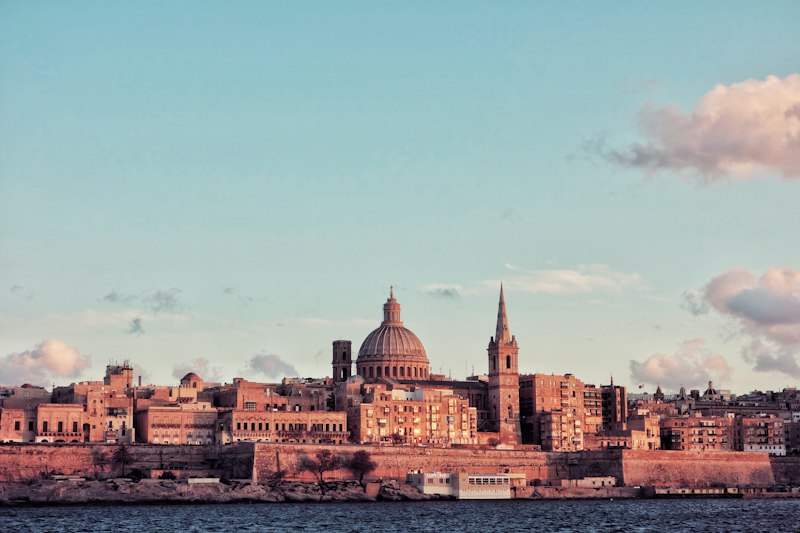
Valletta: Europe's Smallest Capital
Valletta is one of Europe's most concentrated historic cities. Built by the Knights of St John in the 1560s, the entire city is a UNESCO World Heritage Site. Its grid of narrow streets is lined with Baroque architecture, churches, palaces, and fortifications overlooking the Grand Harbour and Marsamxett Harbour.
For decades, Valletta was quiet — almost sleepy. The city lost population as people moved to the suburbs. But since its designation as European Capital of Culture in 2018, Valletta has undergone a renaissance. Boutique hotels, restaurants, wine bars, and cultural venues have opened. Young professionals and creative types have moved in, and property values have risen accordingly.
The Property Market
Valletta's property market is unique in Malta. Most buildings are historic townhouses — tall, narrow limestone structures with traditional Maltese balconies, internal courtyards, and (often) a rooftop terrace with views. Purpose-built apartments are rare; most residential units are converted floors within these townhouses.
Buying
- 1-bedroom apartment (converted): €180,000 – €350,000
- 2-bedroom apartment: €280,000 – €500,000
- Townhouse (full building): €500,000 – €2,000,000+
- Penthouse/rooftop: €400,000 – €1,200,000
Renting (monthly)
- 1-bedroom: €800 – €1,300
- 2-bedroom: €1,100 – €1,800
- Townhouse: €2,000 – €4,000
Prices depend heavily on the street, views, and quality of restoration. A ground-floor apartment on a narrow back street will be a fraction of the price of a restored upper-floor apartment overlooking the Grand Harbour.
Restoration Rules
Because Valletta is a UNESCO site, any renovation or restoration is subject to strict planning controls by the Superintendence of Cultural Heritage and the Planning Authority:
- Facades must be preserved — you generally cannot alter the external appearance of a building
- Traditional Maltese balconies must be maintained or restored to their original design
- Window styles, colours, and materials are regulated
- Internal alterations are more flexible, but structural changes still need approval
- Modern additions (like rooftop structures or penthouse extensions) are possible but require careful design that respects the historic context
Restoration can be expensive, but the government offers tax incentives for restoring properties in Valletta and other Urban Conservation Areas. These have included reduced stamp duty (as low as 2.5%) and income tax credits for restoration costs. Check with your notary for current schemes.
Lifestyle
Living in Valletta is unlike anywhere else in Malta:
- Culture: The Manoel Theatre (one of Europe's oldest), the National Museum of Archaeology, MUZA art museum, St John's Co-Cathedral, and regular outdoor events and festivals
- Dining: Republic Street and the surrounding streets are packed with restaurants. From traditional Maltese at Nenu the Artisan Baker to fine dining at Palazzo Preca. The waterfront area (Valletta Waterfront) has a strip of restaurants in converted warehouses
- Shopping: Small, independent shops dominate. You won't find global chains but you will find antique dealers, artisan workshops, and speciality stores
- Daily life: Small supermarkets and convenience stores for essentials, but most residents do their main grocery shopping outside the city
- Nightlife: Strait Street (Strada Stretta) — once the red-light district during British rule — has been transformed into a strip of wine bars, jazz clubs, and cocktail bars. It's one of Malta's most atmospheric night-out streets
Transport
This is Valletta's biggest consideration:
- Cars are mostly banned from the city centre during daytime. Residents can apply for a special vehicle permit, but parking within the walls is extremely limited
- Most residents walk everywhere within the city and use the bus or a car parked at the MCP car park (the multi-storey just outside City Gate) for trips elsewhere
- Bus terminus is right at City Gate — virtually every bus route on the island passes through Valletta
- Ferry to Sliema from the Marsamxett side (5 minutes, very convenient)
If you need a car daily, living in Valletta requires adjusting your expectations. Many residents manage with a Bolt/eCabs account and occasional car rental.
Pros
- Stunning architecture and atmosphere — every walk is a visual experience
- Cultural richness — museums, theatres, festivals, history at every turn
- Growing food and drink scene — among the best in Malta
- Compact and walkable — you can cross the entire city in 15 minutes on foot
- Strong investment potential — limited supply in a historic city means values are resilient
Cons
- Parking and car access — living here essentially means a car-free lifestyle
- Noise from nightlife — Strait Street bars can be heard in nearby apartments
- Tourist crowds — cruise ship passengers flood the streets daily, especially Republic Street
- Limited amenities — no large supermarkets, gyms are basic, schools are outside the city
- Renovation costs — restoring an old Valletta property to modern standards is expensive (€1,500-€3,000/sqm for quality restoration)
- Humidity and maintenance — historic limestone buildings require ongoing care. Damp is common at ground floor level
Who Should Live in Valletta?
Valletta is ideal for culture lovers, couples, and creative professionals who appreciate historic architecture and can live without a car. It works well for remote workers who want an inspiring environment and for investors targeting the high-end short-term rental market (Valletta performs well on Airbnb).
It's less suitable for families with young children (no gardens, limited playgrounds, no schools), people who need a car for daily commuting, or anyone who prefers modern, spacious apartments.
Looking for property in Malta?
Search every listing from every major agency, all in one place.
Search PropertiesRelated Articles
San Ġwann & Kappara Property Guide: The Practical Middle
Ten minutes from everything that pays Malta's salaries, San Ġwann delivers family-sized homes at central prices without coastal premiums. The full picture, including Kappara's quiet outperformance.
23 Sept 2026
LocationsSwieqi & Madliena Property Guide: The Residential North-East
Swieqi is where St Julian's professionals actually live; Madliena is where Malta's money builds villas. Real prices for both, the High Ridge and Gharghur edges, and what the premium buys.
13 Sept 2026
LocationsThe Three Cities Property Guide: Birgu, Senglea & Cospicua
Across the harbour from Valletta, the Three Cities went from forgotten docklands to Malta's most compelling heritage play. Real prices, the marina effect, and which of the three fits which buyer.
6 Sept 2026
📉 Get the weekly Malta price-drop digest
Every Friday: the biggest reductions across all 13 agencies + market data nobody else publishes. Free.